
The Troutbeck Valley walk is a wonderful way to explore one of the Lake District’s most attractive traditional landscapes, combining peaceful countryside, historic farmhouses, woodland paths and beautiful views towards Windermere and the surrounding fells.
Situated between Windermere and Ambleside, Troutbeck Valley offers a different walking experience from the more demanding mountain routes found elsewhere in the Lake District.
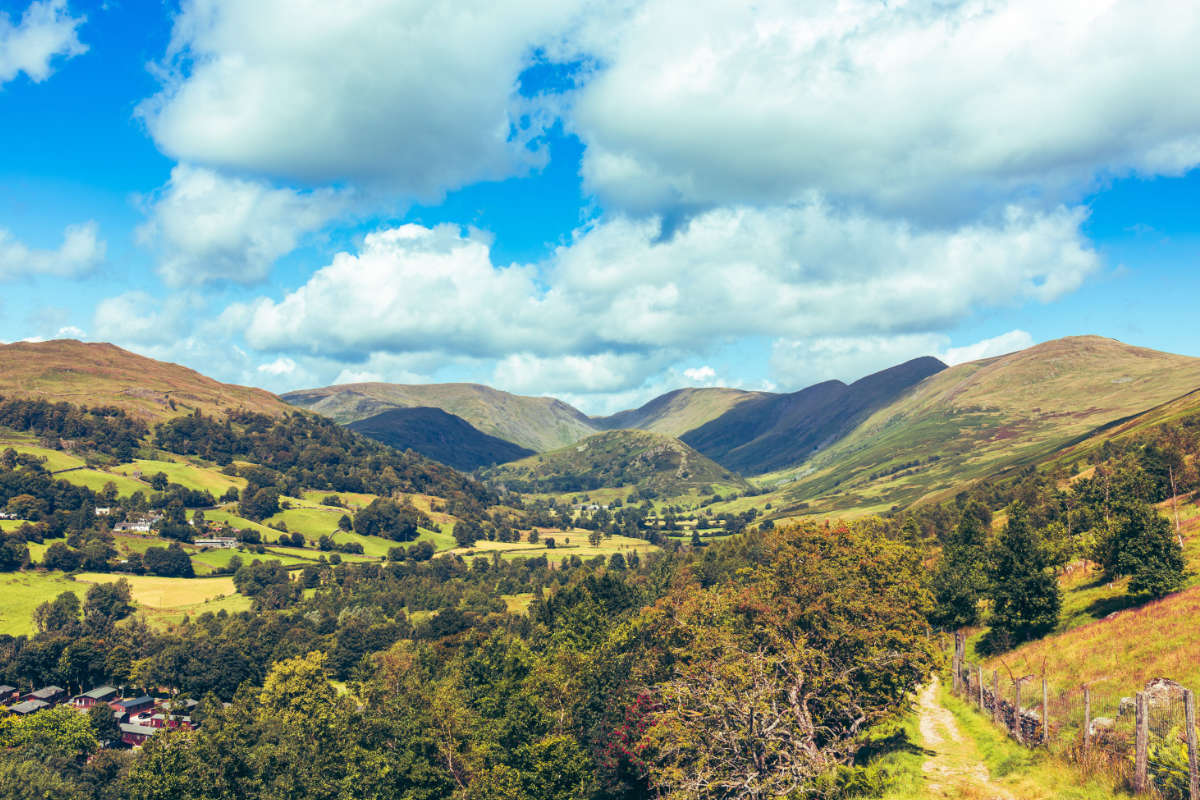
Here, ancient tracks, traditional stone walls and attractive Lakeland buildings create a landscape that has retained much of its rural character.
Starting from Brockhole on the shores of Windermere, this circular walk follows countryside paths and historic lanes into Troutbeck village before returning through the surrounding hillsides.
Along the way, walkers can enjoy views across the valley, discover the historic farmhouse of Townend and experience some of the quieter countryside around England’s largest natural lake.
It’s an excellent choice for visitors looking for a rewarding half-day walk with plenty of interesting scenery, without tackling one of the Lake District’s higher summits.
Troutbeck Valley Walk at a Glance
- Location: Troutbeck Valley, near Windermere, Lake District, Cumbria
- Starting point: Brockhole Visitor Centre, Windermere
- Distance: Approximately 4 miles (6.4 km)
- Walking time: Allow 2–3 hours, including breaks
- Difficulty: Moderate
- Route type: Circular
- Terrain: Countryside footpaths, bridleways, country lanes and potentially muddy tracks
- Main highlights: Troutbeck Valley, Townend farmhouse, traditional Lakeland scenery and views towards Windermere
- Suitable footwear: Walking boots or supportive walking shoes with reliable grip
- OS Explorer map: OL7 – The English Lakes, South Eastern Area
This guide follows the National Trust’s Townend and Troutbeck Valley circular walk. Walkers should use the official route map for precise navigation and check current access arrangements before setting out.
Starting the Walk at Brockhole
The walk begins at Brockhole, the Lake District Visitor Centre, situated beside the A591 between Windermere and Ambleside.
Brockhole occupies an attractive position overlooking Windermere and is a popular destination for visitors exploring the southern Lake District.
Its location makes it a convenient starting point for a countryside walk, with parking, visitor facilities and public transport connections nearby.
From Brockhole, the route initially follows the roadside footpath beside the A591 before crossing towards Wain Lane.
Take particular care when crossing the main road, as traffic can be busy throughout the year.
Once away from the road, the surroundings quickly become more peaceful as the route climbs towards the countryside above Windermere.
The gradual transition from the lakeside visitor centre to traditional farmland is one of the attractions of this walk.
The opening climb provides an opportunity to settle into a comfortable walking pace before reaching the more open countryside towards Troutbeck.
Following Wain Lane Towards Troutbeck
Wain Lane is an old route that has been used for centuries to connect the surrounding countryside with Windermere.
Historically, tracks like this were important for transporting agricultural produce, stone and other materials between rural communities.
Today, the lane provides walkers with an attractive route through the lower hillsides towards Troutbeck Valley.
The path climbs gradually through a landscape of fields, scattered trees and traditional stone walls.
Along the way, the route passes near Middlerigg Tarn, a small body of water set among the surrounding countryside.
The terrain is generally manageable, although sections can become muddy following prolonged rainfall.
As the path gains height, the views become increasingly rewarding, with glimpses of the surrounding fells and countryside.
This is a particularly attractive section during spring and summer, when the fields are green and the surrounding vegetation is at its most colourful.
The countryside around Troutbeck has been shaped by generations of farming, and the traditional field boundaries remain an important feature of the landscape.
Look back occasionally towards Windermere, as the changing elevation provides different perspectives across the surrounding hillsides.
Discovering Troutbeck Valley
Troutbeck Valley is one of the Lake District’s most distinctive rural landscapes.
Unlike some of the region’s busier tourist destinations, Troutbeck has retained the appearance of a traditional Lakeland farming community.
The village is spread along the hillside rather than concentrated around a single centre, with historic houses, stone barns and narrow lanes following the contours of the valley.
The surrounding fields and fellside pastures provide an attractive backdrop, while traditional dry-stone walls reflect generations of agricultural activity.
The valley’s character is closely connected with farming, particularly the traditional hill farming practices that have helped shape much of the Lake District.
Troutbeck is also associated with the famous Lake District author and conservationist Beatrix Potter, who owned Troutbeck Park Farm.
Her interest in farming and the preservation of traditional Lakeland landscapes helped protect important parts of the region for future generations.
As you approach the village, take time to appreciate the architecture and the relationship between the historic buildings and the surrounding countryside.
This is one of the features that makes the Troutbeck Valley walk particularly rewarding.
Visiting Townend: A Historic Lakeland Farmhouse
One of the main highlights of the route is Townend, a historic farmhouse now cared for by the National Trust.
Situated in Troutbeck village, Townend provides a fascinating glimpse into the lives of a prosperous Lakeland farming family.
The house was home to the Browne family for more than 400 years, with successive generations contributing to its distinctive character.
Inside, visitors can discover historic furniture, carved wooden interiors and collections that reflect the family’s interests and everyday life.
The building is particularly notable for its traditional Lakeland architecture and the craftsmanship of its interior woodwork.
Even if you don’t plan to visit the house itself, Townend is an attractive landmark along the walking route.
Its setting among the stone buildings and surrounding countryside helps illustrate the history of Troutbeck as a farming community.
If you would like to explore the interior, check the National Trust’s current opening times and admission arrangements before travelling.
Allowing time for a visit can turn the walk into a longer and particularly enjoyable half-day outing.
Walking Through Troutbeck Village
From Townend, the route continues through Troutbeck village, passing traditional houses, barns and attractive countryside.
The narrow lanes and historic buildings give the area a peaceful character, particularly outside the busiest holiday periods.
As you walk through the village, look out for the distinctive stonework and architectural details that are characteristic of older Lakeland properties.
Many of these buildings reflect the valley’s long agricultural history.
The route continues towards the village’s former post office area before joining Robin Lane.
This section provides an opportunity to enjoy the countryside at a gentler pace, with views across the surrounding fields and hillsides.
Although much of the walking is relatively straightforward, remain alert for vehicles on the narrower roads.
The village’s elevated position also provides attractive views across the surrounding valley, particularly when the weather is clear.
For walkers interested in photography, the combination of traditional buildings, stone walls and distant fells offers plenty of opportunities.
Enjoying Views Towards Windermere
As the route follows Robin Lane and the surrounding tracks, the landscape opens to reveal views towards Windermere.
The lake stretches through the southern Lake District, surrounded by wooded hillsides, villages and distant mountains.
From elevated viewpoints, the contrast between the green countryside and the broad waters of Windermere is particularly striking.
On clear days, the surrounding fells provide an impressive backdrop, while changing weather and light can transform the appearance of the landscape.
This is an excellent opportunity to stop for photographs or simply enjoy the scenery.
Although the route does not climb to a major mountain summit, the views demonstrate that some of the Lake District’s most rewarding scenery can be enjoyed on relatively modest countryside walks.
The landscape is particularly attractive during spring and summer, when the surrounding fields are green, and during autumn when the woodland begins to change colour.
Take time to enjoy these viewpoints before continuing towards the return section of the route.
Returning to Brockhole
The final section of the circular route follows countryside paths and lanes back towards Brockhole.
After leaving Robin Lane, the route descends towards Mirk Lane, passing through fields and traditional Lakeland countryside.
The ground can be uneven in places, and some sections may become slippery following rainfall.
Take care when crossing roads and negotiating stiles.
As the route approaches the A591, the surroundings become busier again.
The final road crossing requires particular attention before returning to Brockhole Visitor Centre.
Once back at Brockhole, walkers can enjoy the visitor facilities or spend some additional time exploring the grounds beside Windermere.
The walk provides a satisfying combination of countryside, history and lake scenery within a manageable half-day outing.
What Walking Boots Are Best for Troutbeck Valley?
Although the Troutbeck Valley walk is less demanding than many of the Lake District’s higher mountain routes, suitable footwear is still important.
The route includes a mixture of countryside tracks, grassy paths, uneven ground and sections that can become muddy after wet weather.
Lightweight walking boots are a sensible choice, particularly during autumn, winter and spring.
Waterproof boots can help keep feet comfortable when crossing damp fields or walking along muddy tracks.
During dry summer conditions, supportive walking shoes with reliable grip may also be suitable.
However, ordinary trainers with smooth soles are less appropriate when the ground is wet.
The most important consideration is choosing footwear that provides reliable traction and remains comfortable over several miles.
For walkers who regularly explore the Lake District, a good pair of walking boots can be a worthwhile investment, particularly when routes include a mixture of countryside paths and rougher fellside terrain.
If you’re unsure what type of footwear is best for your next Lake District walk, read our guide to Choosing the Right Walking Boots.
Our Walking Boots vs Walking Shoes guide also explains the advantages of each option for different walking conditions.
When Is the Best Time to Walk Troutbeck Valley?
Troutbeck Valley can be enjoyed throughout much of the year, although the landscape and walking conditions change with the seasons.
Spring
Spring is an attractive time to explore the valley, with fresh greenery appearing across the fields and surrounding hillsides.
The countryside is particularly appealing as trees begin to leaf and the farming landscape becomes more colourful.
However, paths may remain muddy following winter rainfall.
Waterproof footwear is useful, particularly on grassy tracks and areas of softer ground.
Summer
Summer brings longer daylight hours and generally more opportunities for comfortable walking conditions.
The route is particularly enjoyable during fine weather, with clear views towards Windermere and the surrounding fells.
Brockhole and nearby tourist destinations can be busy during weekends and school holidays.
Starting earlier in the day can provide a quieter walking experience.
Even during summer, carrying a waterproof jacket is sensible because Lake District weather can change quickly.
Autumn
Autumn brings warmer colours to the woodland and surrounding countryside.
The changing landscape can be particularly attractive for photography, especially during clear mornings.
However, rainfall and fallen leaves can make some paths slippery.
The shorter daylight hours also make it important to plan your walk carefully.
Winter
Winter offers a quieter atmosphere and beautiful views when the surrounding fells are covered in snow.
Nevertheless, shorter daylight hours, icy conditions and wet ground can make the route more challenging.
Check the forecast carefully and avoid setting out when conditions are unsuitable.
Although Troutbeck Valley is less exposed than the higher mountains, ice and snow can still make countryside paths hazardous.
Is the Troutbeck Valley Walk Suitable for Beginners?
The Troutbeck Valley circular walk is classified as moderate, making it suitable for many reasonably fit walkers who are comfortable with countryside paths and some uphill walking.
The distance of approximately four miles is manageable for a half-day outing, and the route avoids the exposed summits associated with more demanding Lake District walks.
However, the walk is not completely flat.
There are gradual climbs, uneven tracks, stiles and potentially muddy sections.
Walkers should also be comfortable crossing roads, including the busy A591.
Families with older children who enjoy countryside walking may find the route rewarding, particularly with the opportunity to explore Brockhole and the historic village.
Younger children may find the uphill sections more demanding, so allow extra time if walking as a family.
The route is not suitable for pushchairs or visitors requiring step-free access.
Beginners should carry suitable navigation equipment and allow plenty of time to complete the walk.
Walking Safely in Troutbeck Valley
Even relatively short countryside walks require preparation.
Before setting out, check the weather forecast and ensure everyone in your group is comfortable with the planned distance.
It’s sensible to carry:
- Comfortable walking boots or shoes with good grip
- A waterproof jacket
- Warm layers appropriate to the season
- Drinking water and snacks
- A map and compass or reliable navigation equipment
- A fully charged mobile phone
- A small first-aid kit
Take particular care at road crossings and on narrow country lanes.
Keep dogs under control around livestock and follow the Countryside Code.
Although the route is generally sheltered compared with higher mountain walks, Lake District weather can still change quickly.
During autumn and winter, a head torch is useful in case your walk takes longer than expected.
For additional advice about walking safely in the region, read our Mountain Safety in the Lake District guide.
Getting to Brockhole and Troutbeck Valley
Brockhole Visitor Centre is situated beside the A591 between Windermere and Ambleside.
By Car
Brockhole has visitor parking, making it a convenient starting point for the circular walk.
The centre is accessible from Windermere, Ambleside and the surrounding Lake District road network.
Parking charges and availability may vary, so check current arrangements before travelling.
During busy weekends and school holidays, arriving earlier in the day can help avoid the busiest periods.
By Public Transport
Bus services connect Brockhole with Windermere and Ambleside.
Windermere railway station provides connections to the wider rail network, making it possible to visit the area without a car.
Public transport can be a convenient alternative to driving, particularly during the main holiday season.
Check current bus and train timetables before travelling.
Facilities
Brockhole offers visitor facilities, refreshments and opportunities to explore the grounds beside Windermere.
Troutbeck village also has places where walkers may be able to obtain refreshments, although opening times can vary.
Carry sufficient drinking water and snacks rather than relying on facilities being open throughout the route.
Where to Eat After Walking Troutbeck Valley
After completing the Troutbeck Valley walk, there are several options for refreshments in the surrounding area.
Brockhole is a convenient place to stop for a drink or something to eat before travelling onwards.
Troutbeck village also has traditional pubs and places offering refreshments.
Alternatively, nearby Windermere and Ambleside provide a wider selection of cafés, restaurants and pubs.
For walkers exploring other parts of the Lake District, Keswick is another excellent destination for combining countryside walks with an enjoyable meal.
Take a look at our guide to Where to Eat in Keswick: Three Restaurants Recommended by a Local Walker for three personal recommendations.
Other Lake District Walks Worth Exploring
If you’ve enjoyed the Troutbeck Valley walk, there are plenty of other rewarding routes to explore throughout the Lake District.
Discover a beautiful mountain tarn above Grasmere, following countryside paths and the waterfalls of Sourmilk Gill.
Explore one of the northern Lake District’s most popular fell walks, with impressive views across Derwentwater and the surrounding mountains.
Walla Crag to Ashness Bridge Walking Guide
Enjoy a scenic circular walk through Great Wood, across Walla Crag and onwards to the historic Ashness Bridge.
Find inspiration for more walking adventures around Derwentwater and the surrounding northern fells.
These guides provide opportunities to discover different parts of the Lake District, from peaceful countryside valleys to more challenging mountain landscapes.
Is the Troutbeck Valley Walk Worth Doing?
For walkers visiting Windermere or Ambleside, the Troutbeck Valley circular route is an excellent choice.
It offers a combination of attractive countryside, traditional Lakeland architecture, historic landmarks and beautiful views without requiring a demanding mountain ascent.
The historic farmhouse of Townend provides an interesting cultural highlight, while the surrounding lanes and footpaths reveal a quieter side of the Lake District.
At approximately four miles, the route is well suited to a half-day outing, leaving plenty of time to enjoy the scenery and explore the surrounding area.
Whether you’re visiting during the fresh greenery of spring, the longer days of summer or the colourful landscapes of autumn, Troutbeck Valley offers a rewarding opportunity to experience the traditional countryside of the southern Lake District.
Route reference: This guide is based on the National Trust’s Townend and Troutbeck Valley circular walk. For the official route map, detailed directions and current visitor information, visit:
https://www.nationaltrust.org.uk/visit/lake-district/townend/townend-and-troutbeck-valley-walk
Walking routes, access arrangements and ground conditions can change. Always check current information, weather forecasts and an appropriate route map before setting out.