
The Walla Crag to Ashness Bridge walk is one of the most rewarding shorter walks in the northern Lake District, combining beautiful woodland, open fellside paths and spectacular views across Derwentwater towards the surrounding mountains.
Starting from Great Wood, just outside Keswick, this circular route climbs steadily towards Walla Crag before crossing open countryside to reach Ashness Bridge, one of the Lake District’s most photographed landmarks.
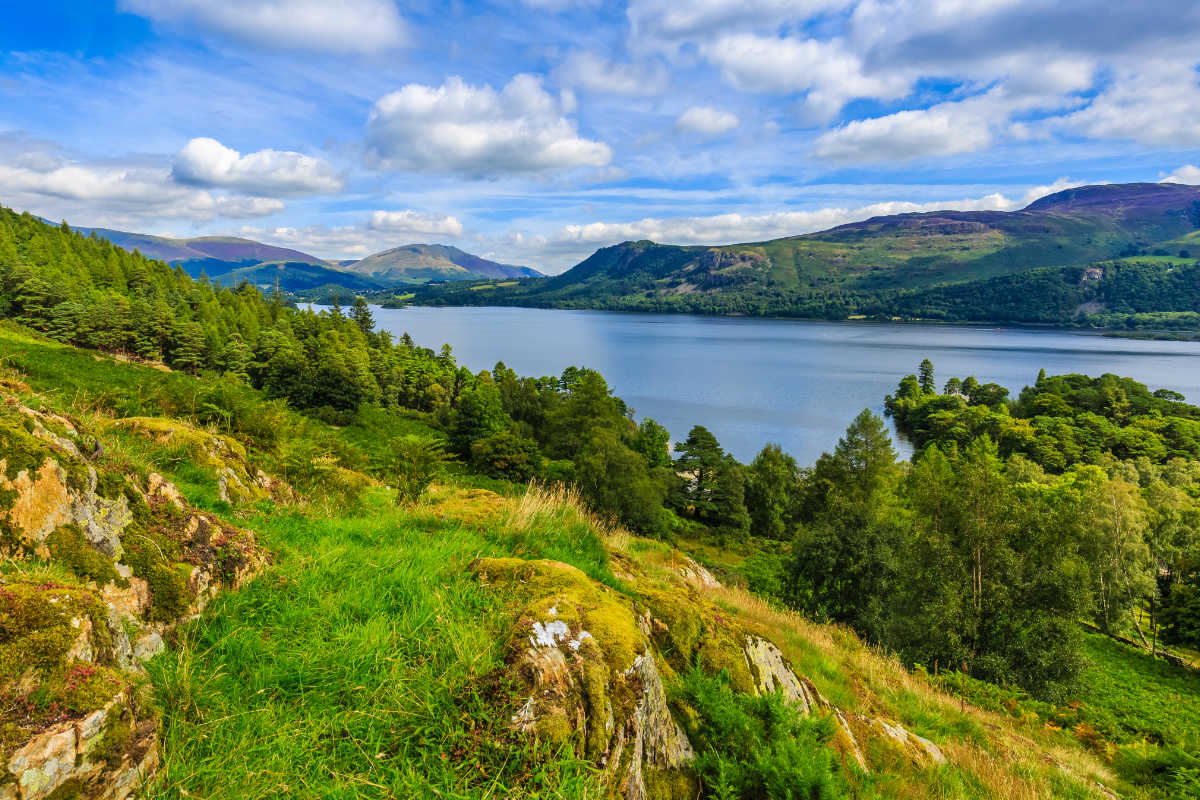
Although the walk is relatively short compared with some of the region’s more demanding mountain routes, it offers an excellent introduction to fell walking, with varied terrain and plenty of opportunities to enjoy the scenery.
It’s particularly appealing for walkers looking for a half-day adventure without committing to a full mountain ascent.
Walla Crag to Ashness Bridge Walk at a Glance
- Location: Keswick, Northern Lake District, Cumbria
- Starting point: Great Wood car park, Borrowdale Road
- Distance: 4.5 miles (7.2 km)
- Walking time: Approximately 2 hours, allowing longer for photographs and rest stops
- Difficulty: Moderate
- Route type: Circular
- Terrain: Woodland paths, rocky tracks, open fellside and potentially muddy sections
- Main highlights: Walla Crag, Derwentwater, Borrowdale and Ashness Bridge
- Suitable footwear: Walking boots or supportive walking shoes with reliable grip
The route follows the National Trust’s established Walla Crag to Ashness Bridge circular walk.
Starting the Walk at Great Wood
The walk begins at Great Wood car park, situated alongside the B5289 Borrowdale Road, a short distance south of Keswick.
Great Wood is an attractive starting point, with mature woodland covering the lower slopes above Derwentwater. The area is particularly beautiful during autumn, when the trees begin to change colour and fallen leaves cover the woodland paths.
From the car park, the route heads uphill through the trees, gradually gaining height above the lake.
The initial climb provides a good opportunity to settle into a comfortable walking pace. Although the gradients are generally manageable, some sections can be uneven, particularly following wet weather.
As the woodland begins to open, views emerge across Keswick and towards the northern fells.
On a clear day, the distinctive shape of Skiddaw dominates the skyline, while Bassenthwaite Lake can be seen further to the north.
Climbing Towards Walla Crag
After leaving the denser woodland, the route continues across more open ground, following paths around the Brockle Beck valley.
This section introduces some of the varied terrain that makes walking in the Lake District so enjoyable.
The landscape changes from sheltered woodland to grassy slopes, stone tracks and open fellside, with increasingly impressive views towards Derwentwater.
The route crosses Brockle Beck and continues uphill towards Walla Crag.
Although Walla Crag is considerably lower than many of the surrounding Lake District mountains, its position above the eastern shore of Derwentwater makes it an outstanding viewpoint.
The ascent is steady rather than exceptionally steep, but walkers should still take care on rocky or muddy sections.
In wet conditions, some paths can become slippery, making suitable footwear particularly important.
Enjoying the Views from Walla Crag
Walla Crag is undoubtedly one of the highlights of the walk.
Standing above Derwentwater, the summit area provides extensive views across the lake, its islands and the surrounding mountains.
To the west, the familiar outline of Catbells rises above the opposite shore. Beyond it, the north-western fells create an impressive mountain backdrop.
Looking north, Keswick sits beneath the slopes of Skiddaw, while Bassenthwaite Lake stretches into the distance.
On exceptionally clear days, the views extend even further towards the Solway Firth and the Scottish hills.
The rocky viewpoint is an excellent place to stop, enjoy a drink and appreciate the scenery.
However, walkers should take care near exposed edges, particularly during strong winds or when the rocks are wet.
Despite its relatively modest height, Walla Crag offers views that rival those from many longer and more demanding Lake District walks.
Walking Across the Fellside Towards Ashness
After enjoying the summit views, the route continues southwards across open fellside towards Ashness.
This section has a different character from the woodland ascent, with broad views across the Borrowdale landscape.
The path crosses areas of grassland and moorland, where conditions can become wet underfoot after prolonged rainfall.
As the route approaches Ashness, views open towards the dramatic entrance to Borrowdale, with wooded valleys and rugged mountains stretching into the distance.
The landscape here is typical of the central Lake District, where ancient volcanic rocks have helped create the steep-sided valleys and rocky fells for which the region is famous.
Walkers should pay attention to their navigation across the more open sections, particularly when cloud or poor visibility makes landmarks difficult to identify.
Eventually, the route descends towards Ashness, passing through a landscape of traditional stone walls, scattered trees and attractive countryside.
Ashness Bridge: One of the Lake District’s Most Famous Views
Ashness Bridge is one of the most recognisable locations in the Lake District.
This historic stone packhorse bridge crosses Barrow Beck on the road leading towards Watendlath.
Its appeal comes not only from the bridge itself but also from its remarkable setting.
Looking north from the bridge, Derwentwater can be seen framed by the surrounding hills, with Skiddaw rising prominently in the distance.
It’s a view that has appeared in countless photographs, postcards and guidebooks over the years.
The combination of flowing water, traditional stonework and mountain scenery makes Ashness Bridge a particularly attractive stopping point.
Photographers often favour the location during early morning or late afternoon, when softer light can bring out the textures of the stone and surrounding landscape.
During busy holiday periods, the bridge can attract plenty of visitors, so patience may be needed if you’re hoping to take photographs.
Take care around the bridge and nearby road, particularly when traffic or other visitors are present.
Returning Through Great Wood
From Ashness Bridge, the circular route heads back towards Great Wood, following paths through the lower slopes above Derwentwater.
This final section offers a quieter contrast to the exposed fellside, with woodland providing shelter and a different perspective on the surrounding landscape.
The return path crosses Cat Gill before continuing through Great Wood towards the car park.
As with the earlier sections, conditions can be muddy or slippery, especially after rainfall.
Take your time on uneven ground and avoid rushing the descent.
The walk finishes back at Great Wood car park, completing a varied circular route that combines several of the northern Lake District’s most attractive features.
What Walking Boots Are Best for Walla Crag?
Although Walla Crag is not a particularly high mountain, the route includes enough uneven and potentially slippery terrain to make footwear an important consideration.
The woodland paths can be muddy, while the higher sections include loose stones, rocky surfaces and wet grass.
For most walkers, lightweight or midweight walking boots with reliable grip are a sensible choice.
Waterproof footwear can be particularly useful during autumn, winter and early spring, when the ground is more likely to remain wet.
Walking shoes may also be suitable in dry summer conditions, provided they offer adequate grip and support.
However, ordinary trainers with smooth soles are less appropriate, particularly following heavy rain.
If you’re unsure which footwear is best for your walking plans, our guide to Choosing the Right Walking Boots explains the main features to consider.
You can also read our comparison of Walking Boots vs Walking Shoes to help decide which option is most suitable for your needs.
When Is the Best Time to Walk Walla Crag?
The Walla Crag to Ashness Bridge route can be enjoyed throughout much of the year, although conditions vary considerably between seasons.
Spring
Spring brings fresh greenery to Great Wood and the surrounding countryside.
Temperatures are often comfortable for walking, although rainfall can leave some sections muddy.
Summer
Longer daylight hours make summer a popular time to explore Walla Crag.
Clear conditions can provide excellent views across Derwentwater, but the route and Ashness Bridge may be busier during weekends and school holidays.
Autumn
Autumn is a particularly attractive season for this walk.
The woodland around Great Wood displays beautiful seasonal colours, while the surrounding mountains provide a dramatic backdrop.
However, fallen leaves, wet rocks and muddy paths can make some sections slippery.
Winter
Walla Crag can offer beautiful views during winter, particularly when snow covers the higher surrounding fells.
Nevertheless, shorter daylight hours, icy paths and rapidly changing weather can make the walk considerably more challenging.
Walkers should assess the forecast and ground conditions carefully before setting out.
Is Walla Crag Suitable for Beginners?
The Walla Crag to Ashness Bridge walk is classified as moderate, making it suitable for many reasonably fit walkers with some experience of uneven countryside paths.
The distance is manageable for a half-day outing, and the ascent is less demanding than many of the higher Lake District mountains.
However, it should not be treated as a simple level countryside stroll.
There are uphill sections, rocky paths and areas that can become wet or muddy.
Beginners should allow plenty of time, wear suitable footwear and carry a map or reliable navigation equipment.
Families with older children who are comfortable walking several miles may also enjoy the route, although younger children may find some sections tiring.
The walk is not suitable for pushchairs or visitors requiring step-free access.
Walking Safely Around Walla Crag
Even relatively short Lake District walks require preparation.
Before setting out, check the local weather forecast and make sure everyone in your group is comfortable with the planned distance and terrain.
It’s sensible to carry:
- Suitable walking boots or shoes with good grip
- A waterproof jacket
- Warm layers appropriate to the season
- Drinking water and snacks
- A map and compass or reliable navigation equipment
- A fully charged mobile phone
- A small first-aid kit
Remember that mobile reception cannot be guaranteed in every part of the Lake District.
During autumn and winter, consider carrying a head torch in case your walk takes longer than expected.
Always follow the Countryside Code, close gates behind you and keep dogs under control around livestock.
The National Trust asks visitors to keep dogs on leads throughout this particular route.
For additional advice, read our Mountain Safety in the Lake District guide before planning longer or more demanding walks.
Getting to Great Wood
Great Wood car park is situated beside the B5289 Borrowdale Road, approximately 1.5 miles south of Keswick.
Drivers can approach from Keswick, following the road towards Borrowdale.
Parking is managed by the National Trust, and visitors should check current charges and availability before travelling.
For those travelling without a car, the Borrowdale bus service provides access to the eastern side of Derwentwater.
It is also possible to approach Great Wood on foot from Keswick, following the lakeshore path southwards.
Alternatively, walkers using the Keswick Launch can access the Ashness area from the Ashness Gate landing stage, although this changes the starting point of the walk.
Always check current bus and boat timetables before travelling, as services can vary throughout the year.
Where to Eat After Walking Walla Crag
After completing the Walla Crag to Ashness Bridge walk, Keswick is an excellent place to enjoy a well-earned meal.
The town has a wide choice of cafés, pubs and restaurants, making it easy to combine a day outdoors with an enjoyable evening.
For somewhere recommended by a regular Keswick visitor, take a look at our guide to Where to Eat in Keswick: Three Restaurants Recommended by a Local Walker.
It features The Pheasant Inn, Woodstone Pizza & Flame Grill and Star of Siam, three restaurants personally recommended by Ian from Buy Hiking Boots.
Booking ahead is advisable, particularly during weekends and busy holiday periods.
Is the Walla Crag to Ashness Bridge Walk Worth Doing?
For walkers visiting Keswick, the Walla Crag to Ashness Bridge circular route is an excellent choice.
It offers many of the features that make the Lake District special without requiring a particularly long or demanding mountain expedition.
The woodland paths of Great Wood, panoramic views from Walla Crag, open Borrowdale scenery and historic Ashness Bridge combine to create a varied and memorable walk.
At approximately 4.5 miles, it’s an ideal half-day route for walkers wanting to explore beyond the more familiar lakeside paths around Derwentwater.
Whether you’re visiting during the fresh greenery of spring, the long days of summer or the colourful woodland of autumn, Walla Crag is a rewarding place to experience the beauty of the northern Lake District.
Route reference: This article is based on the National Trust’s Walla Crag to Ashness Bridge circular walk. For the official route map, detailed directions and current visitor information, visit:
Walking routes, access arrangements and ground conditions can change. Always check current information, weather forecasts and an appropriate route map before setting out.