
The Rydal Water and Rydal Cave walk is one of the most rewarding shorter walks in the central Lake District, combining peaceful lakeside scenery, beautiful woodland, rugged fellside paths and a fascinating historic quarry.
Situated between Grasmere and Ambleside, Rydal Water is surrounded by some of the Lake District’s most attractive countryside. Its sheltered setting, wooded shores and views towards the surrounding fells make it a popular destination for walkers throughout the year.
One of the main attractions is Rydal Cave, an impressive man-made cavern created by slate quarrying. The enormous opening, rocky surroundings and shallow pool inside the cave create a dramatic contrast with the peaceful lakeside scenery below.
Starting from White Moss Common, this circular walk follows woodland paths towards Rydal Water before climbing to the cave and returning through the surrounding countryside.
Although the route is relatively short, it includes some rocky and uneven ground, particularly around the cave. It offers an excellent introduction to Lake District walking for visitors who want to experience beautiful scenery without climbing a major mountain summit.
With woodland, water, history and impressive views all within a few miles, the Rydal Water and Rydal Cave walk is an excellent choice for a half-day adventure.
Rydal Water and Rydal Cave Walk at a Glance
- Location: Rydal, between Grasmere and Ambleside, Lake District, Cumbria
- Starting point: White Moss Common car park
- Distance: Approximately 3 miles (4.8 km), depending on the paths followed
- Walking time: Allow 2–2.5 hours, including stops
- Difficulty: Easy to moderate
- Route type: Circular
- Terrain: Woodland paths, lakeside tracks, rocky slopes and uneven fellside paths
- Main highlights: River Rothay, White Moss woodland, Rydal Water, Rydal Cave and views towards Loughrigg Fell
- Suitable footwear: Walking boots or supportive walking shoes with reliable grip
- OS Explorer map: OL7 – The English Lakes, South Eastern Area
This guide follows a shorter circular route from White Moss Common, visiting Rydal Cave and the southern shore of Rydal Water before returning through the woodland.
Several variations are possible, so distances and walking times may differ slightly. Walkers should carry an appropriate map or follow a reliable mapped route.
Starting the Walk at White Moss Common
The walk begins at White Moss Common, an attractive area of woodland and open countryside beside the A591 between Grasmere and Rydal.
White Moss is a popular starting point for several low-level Lake District walks, with paths leading towards Grasmere, Rydal Water and the surrounding fells.
The area is particularly appealing because it provides access to beautiful countryside without requiring a long approach from a town or village.
From the lower White Moss car park, follow the path leading away from the road towards the River Rothay.
The opening section passes through attractive woodland, where trees provide shelter and the sound of flowing water creates a peaceful atmosphere.
This is a particularly enjoyable part of the walk during spring and summer, when the woodland is full of fresh greenery.
The paths around White Moss are generally well established, although some sections can become wet or muddy after rainfall.
As you continue through the woodland, look out for the footbridge crossing the River Rothay.
Crossing the River Rothay
The River Rothay is an important feature of the central Lake District landscape, flowing through the valleys around Grasmere and Rydal before continuing towards Windermere.
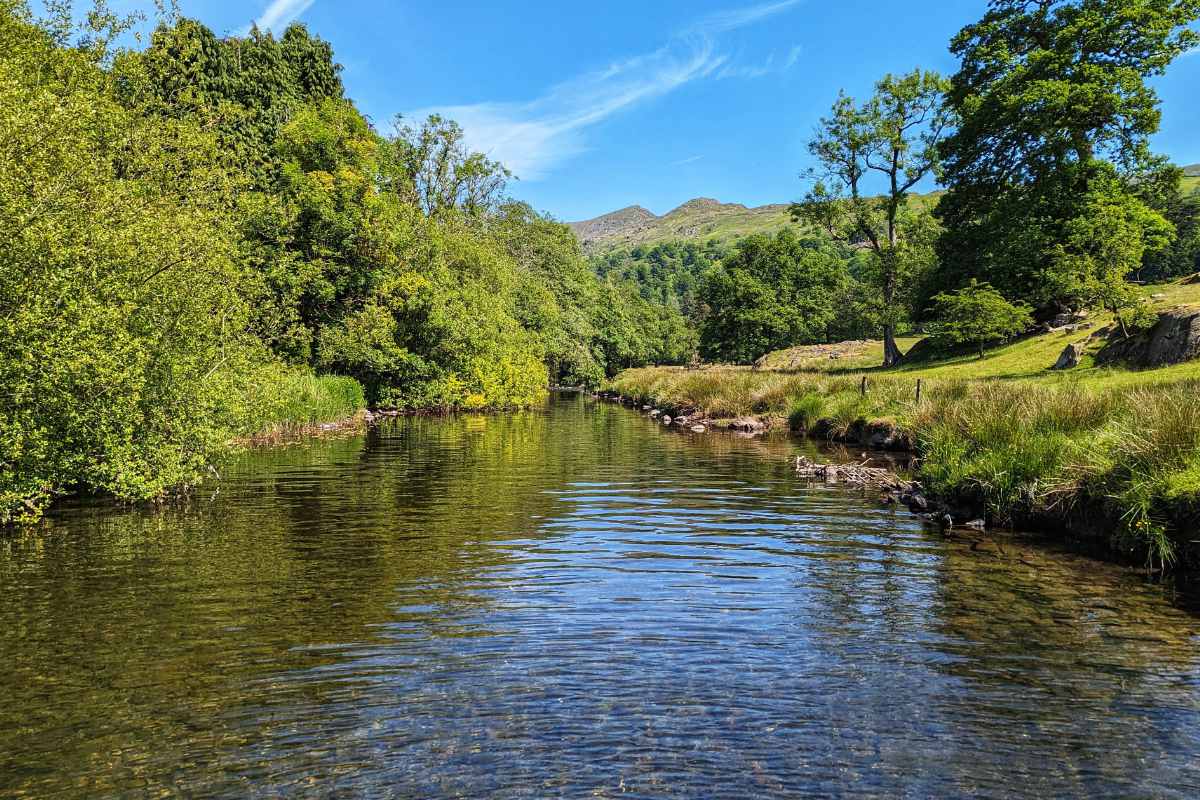
At White Moss, the river passes through attractive woodland, with clear water flowing between grassy banks and over stones.
The surrounding trees create a particularly peaceful setting, especially when sunlight filters through the leaves.
Cross the footbridge and follow the signed woodland paths towards Rydal Water and Rydal Cave.
This section provides an excellent opportunity to appreciate the quieter side of the Lake District.
During spring, woodland flowers and fresh foliage add colour to the surroundings, while autumn brings attractive shades of gold and brown.
The river is also an important habitat for wildlife, and walkers may occasionally spot birds such as dippers and grey wagtails around the water.
Take care near the riverbank, particularly after heavy rainfall when water levels may be higher than usual.
The paths gradually begin to climb away from the river as the route approaches the higher ground above Rydal Water.
Walking Through White Moss Woodland
After crossing the River Rothay, continue through White Moss woodland, following the paths towards Loughrigg Terrace and Rydal Cave.
The woodland is one of the most attractive features of the walk, offering a sheltered environment with a mixture of trees, rocky ground and small streams.
The path climbs gradually through the trees, with occasional steeper sections.
Although the ascent is relatively modest compared with higher Lake District routes, the ground can be uneven and slippery in wet conditions.
As you gain height, the woodland begins to open, revealing glimpses of the surrounding hills.
The contrast between the sheltered woodland and the open fellside scenery makes this section particularly enjoyable.
At path junctions, follow the signs towards Rydal Cave and use your route map to confirm the correct direction.
Some paths lead towards Loughrigg Terrace or continue towards Grasmere, so it’s worth checking your position rather than assuming every track leads to the cave.
Climbing Towards Rydal Cave
The approach to Rydal Cave involves one of the more demanding sections of the walk.
The path climbs above Rydal Water, passing through rocky terrain and areas of loose stone.
Although the climb is relatively short, walkers should take care, particularly after rainfall.
The ground can become slippery, and some sections require more attention than the easier woodland paths below.
As the path gains height, views begin to open across Rydal Water and towards the surrounding fells.
These viewpoints provide an excellent opportunity to stop and enjoy the scenery.
The lake lies below the path, surrounded by woodland and the lower slopes of the nearby mountains.
On clear days, the combination of water, green hillsides and distant fells creates a beautiful Lakeland landscape.
Continue following the established path towards the old quarry workings, where the entrance to Rydal Cave becomes visible.
Discovering Rydal Cave
Rydal Cave is one of the most distinctive landmarks in this part of the Lake District.
Despite its natural appearance, the cave is man-made, having been created during the extraction of slate from the hillside.
Slate quarrying was once an important industry throughout the Lake District, providing building materials for local communities and destinations further afield.
The enormous opening of Rydal Cave is a reminder of this industrial history.
Today, the abandoned workings have become a popular destination for walkers, photographers and visitors exploring the area.
The cave’s dramatic entrance is surrounded by rugged rock, while the interior contains a shallow pool of water.
A series of stepping stones extends into the flooded entrance, creating one of the cave’s most recognisable features.
The cavern is particularly atmospheric because of the contrast between the dark rock, still water and daylight entering through the opening.
However, visitors should remember that Rydal Cave is a former quarry rather than a managed visitor attraction.
Rockfalls have occurred in the past, and entering the cave carries risks from loose rock, slippery surfaces and unstable ground.
The safest way to appreciate Rydal Cave is from outside the entrance, without entering the cavern or attempting to cross the stepping stones.
There is no need to enter the cave to enjoy its impressive appearance or the surrounding scenery.
Enjoying the Views Above Rydal Water
The elevated paths around Rydal Cave provide some of the best views on the walk.
From the hillside, Rydal Water can be seen below, surrounded by woodland and the lower slopes of the nearby fells.
Although Rydal Water is one of the smaller lakes in the Lake District, its setting is particularly attractive.
The lake lies beneath Nab Scar and the surrounding hills, while Loughrigg Fell rises to the south.
The combination of water, woodland and mountains creates a landscape that changes throughout the seasons.
During spring and summer, the surrounding hillsides are green and colourful.
In autumn, the woodland adds rich shades of orange, gold and brown to the scenery.
Winter can bring dramatic skies and snow-covered higher fells, although conditions on the paths may become more challenging.
Take time to enjoy the viewpoints before beginning the descent towards the lakeside.
Walking Along Rydal Water
After visiting Rydal Cave, return to the main path junction and follow the descending route towards Rydal Water.
The descent includes some rocky and uneven ground, so take care when the path is wet.
As you approach the lakeside, the scenery becomes more sheltered, with trees and grassy banks surrounding the water.
Rydal Water is a peaceful place to stop and appreciate the landscape.
The lake is relatively small compared with nearby Windermere, but its sheltered position and attractive surroundings make it particularly rewarding for walkers.
On calm days, reflections of the surrounding hills and woodland can be seen across the water.
There are several places along the shore where walkers can stop for a drink or picnic.
However, take care near the water’s edge, particularly with children.
Lake District lakes can be unexpectedly cold, even during summer, and underwater hazards may not be visible from the shore.
The lakeside paths are generally easier than the rocky ascent to the cave, although muddy sections can still occur after rainfall.
Returning Through White Moss
For the shorter circular walk, follow the established lakeside path back towards White Moss woodland.
The return section provides another opportunity to enjoy the views across Rydal Water before the path moves away from the shore.
Small streams cross parts of the route, and some sections may be wet following heavy rainfall.
The path eventually leads back towards the woodland and the River Rothay.
From here, retrace the opening section of the walk across the footbridge and return to White Moss Common car park.
The combination of woodland, lakeside scenery and the historic cave makes this a particularly satisfying circular route.
Although the walk is relatively short, there is plenty to see, so allow time for photographs and breaks rather than rushing around the circuit.
Rydal Water and William Wordsworth
The landscape around Rydal has strong connections with William Wordsworth, one of England’s most celebrated poets.
Wordsworth lived at nearby Rydal Mount from 1813 until his death in 1850.
The house and its gardens overlook the surrounding countryside and reflect the poet’s close relationship with the Lake District landscape.
Wordsworth frequently walked through the surrounding valleys and hills, drawing inspiration from the natural scenery.
The area around Rydal Water, Grasmere and Ambleside is often described as Wordsworth country because of its importance in his life and writing.
For visitors interested in literature and local history, combining the walk with a visit to Rydal Mount or nearby Grasmere can make an enjoyable day out.
The peaceful scenery around Rydal Water helps explain why this part of the Lake District inspired generations of writers, artists and visitors.
What Walking Boots Are Best for Rydal Cave?
The Rydal Water and Rydal Cave walk includes a mixture of easy woodland paths and rougher, rocky terrain.
Although the route is relatively short, the climb towards the cave requires footwear with reliable grip.
The rocky paths can become slippery after rainfall, while woodland tracks may remain muddy even during otherwise dry weather.
For most walkers, lightweight walking boots are a sensible choice.
Waterproof boots are particularly useful during autumn, winter and spring when wet ground is more common.
During dry summer conditions, supportive walking shoes with good traction may also be suitable.
However, ordinary trainers with smooth soles are not ideal for the rocky sections around Rydal Cave.
Footwear should provide sufficient grip, comfort and stability for walking across uneven ground.
If you’re choosing footwear for your next Lake District adventure, our guide to Choosing the Right Walking Bootsexplains the main features to consider.
You can also read Walking Boots vs Walking Shoes to help decide which type of footwear is most suitable for your walking plans.
When Is the Best Time to Walk Rydal Water and Rydal Cave?
The walk can be enjoyed throughout much of the year, although conditions change considerably between seasons.
Spring
Spring is one of the most attractive times to explore White Moss woodland.
Fresh greenery appears across the surrounding trees, and woodland flowers bring colour to the landscape.
The River Rothay and surrounding streams may be flowing strongly following periods of rainfall.
However, some paths can remain muddy, so waterproof footwear is recommended.
Summer
Summer brings longer daylight hours and generally more opportunities for comfortable walking conditions.
Rydal Water is particularly attractive during fine weather, with beautiful reflections and clear views towards the surrounding fells.
The route can become busy during weekends and school holidays, particularly around Rydal Cave.
Starting earlier in the morning can provide a quieter walking experience.
Remember to carry drinking water and sun protection during warmer weather.
Autumn
Autumn transforms the woodland around White Moss and Rydal Water.
The changing leaves create beautiful colours, making this an excellent time for photography.
However, wet leaves and rocky surfaces can become slippery.
Take extra care on the ascent and descent around Rydal Cave.
Winter
Winter can bring a peaceful atmosphere to the area, particularly when the surrounding fells are covered in snow.
However, shorter daylight hours, ice and wet ground can make the route considerably more challenging.
The rocky paths around Rydal Cave can become hazardous in freezing conditions.
Check the weather forecast carefully and be prepared to change your plans if conditions are unsuitable.
Is the Rydal Cave Walk Suitable for Beginners?
The Rydal Water and Rydal Cave walk is a good introduction to Lake District walking for reasonably fit beginners.
The distance is manageable for a half-day outing, and the route avoids the long climbs and exposed summits associated with more demanding mountain walks.
However, the walk is not completely flat.
The climb towards Rydal Cave includes rocky and uneven ground, while the descent can be slippery after rainfall.
Beginners should wear suitable footwear, allow plenty of time and carry reliable navigation equipment.
Families with older children who enjoy countryside walking may find the route particularly rewarding.
The combination of woodland, lakeside scenery and the impressive cave provides plenty of interest along the way.
Younger children may need assistance on the steeper sections, and everyone should remain well clear of unstable rock around the quarry.
The complete cave route is not suitable for pushchairs or wheelchair users.
However, White Moss has shorter, more accessible woodland and lakeside routes that may be suitable for visitors who prefer easier walking.
Can You Walk Around Rydal Water Without Visiting the Cave?
Yes. Visitors who prefer a gentler walk can explore the woodland and lakeside paths around White Moss without climbing towards Rydal Cave.
The Lake District National Park Authority has developed accessible walking routes in the White Moss area, including paths towards the shore of Rydal Water.
These provide opportunities to enjoy the scenery without tackling the rocky quarry approach.
The shorter lakeside options are particularly appealing for families with younger children and walkers who prefer relatively level ground.
However, accessibility varies between paths, and some sections still include slopes, uneven surfaces or shallow stream crossings.
Check the National Park Authority’s current Miles Without Stiles information before travelling if step-free access is important.
Walking Safely Around Rydal Water and Rydal Cave
Even relatively short Lake District walks require sensible preparation.
Before setting out, check the weather forecast and make sure everyone in your group is comfortable with the planned distance and terrain.
It’s advisable to carry:
- Walking boots or shoes with reliable grip
- A waterproof jacket
- Warm clothing appropriate to the season
- Drinking water and snacks
- A map and compass or reliable navigation equipment
- A fully charged mobile phone
- A small first-aid kit
Take particular care on the rocky paths leading towards Rydal Cave.
Avoid loose scree, unstable rock and slippery surfaces.
Do not enter the cave or attempt to cross the stepping stones, as the former quarry presents hazards that may not be immediately obvious.
Keep children under close supervision around the cave and near the lake.
Dogs should be kept under close control around livestock and wildlife.
Remember that mobile phone reception cannot be guaranteed throughout the Lake District.
During autumn and winter, carrying a head torch is also sensible in case your walk takes longer than expected.
For further advice, read our Mountain Safety in the Lake District guide before exploring more demanding walking routes.
Getting to White Moss and Rydal Water
White Moss Common is situated beside the A591 between Grasmere and Rydal, making it accessible from several parts of the central Lake District.
By Car
There are public car parks at White Moss, providing convenient access to the surrounding walking routes.
Parking can become busy during weekends, bank holidays and the main summer season.
Charges and payment arrangements may change, so check current information before travelling.
Alternative parking is available around Rydal, although choosing a different starting point may change the distance and route.
By Public Transport
Bus services run along the A591 between Windermere, Ambleside, Rydal, Grasmere and Keswick.
White Moss is served by routes including the 555, making public transport a practical option for visitors who prefer not to drive.
Always check current timetables and stopping arrangements before travelling.
Facilities
Facilities around White Moss may include public toilets and seasonal refreshments, depending on the car park and time of year.
Nearby Grasmere and Ambleside offer a wider selection of cafés, shops, restaurants and visitor facilities.
There are no refreshments available at Rydal Cave itself, so carry sufficient drinking water and snacks.
Where to Eat After Walking Rydal Water
One of the advantages of walking around Rydal Water is its location between Grasmere and Ambleside.
Both destinations offer plenty of opportunities to enjoy refreshments after a countryside walk.
Grasmere is particularly popular for its traditional tearooms, cafés and famous gingerbread.
Ambleside provides a wider selection of restaurants, pubs and cafés, making it a convenient place to stop for lunch or an evening meal.
For walkers exploring the northern Lake District, Keswick is another excellent destination for combining scenic walks with good food.
Take a look at our guide to Where to Eat in Keswick: Three Restaurants Recommended by a Local Walker for some personal recommendations.
Other Lake District Walks Worth Exploring
If you’ve enjoyed the Rydal Water and Rydal Cave walk, there are plenty of other rewarding routes to explore across the Lake District.
Easedale Tarn Walking Guide
Discover a beautiful mountain tarn above Grasmere, following countryside paths and the waterfalls of Sourmilk Gill.
Troutbeck Valley Walking Guide
Explore a scenic circular route near Windermere, featuring traditional Lakeland countryside, historic Townend farmhouse and views towards the surrounding fells.
Catbells Walking Guide
Enjoy one of the northern Lake District’s most popular fell walks, with impressive views across Derwentwater and the surrounding mountains.
Walla Crag to Ashness Bridge Walking Guide
Discover a scenic circular route from Great Wood, taking in Walla Crag and the famous Ashness Bridge.
Best Walks Around Keswick
Find inspiration for more walking adventures around Derwentwater and the surrounding northern fells.
These guides provide opportunities to experience different parts of the Lake District, from peaceful lakeside paths to more challenging mountain routes.
Is the Rydal Water and Rydal Cave Walk Worth Doing?
For walkers visiting Grasmere or Ambleside, the Rydal Water and Rydal Cave walk is an excellent choice.
It combines attractive woodland, peaceful riverside paths, beautiful lake scenery and a fascinating historic quarry within a manageable half-day outing.
The climb towards Rydal Cave provides an interesting change of scenery, while the surrounding viewpoints offer impressive views across Rydal Water and the nearby fells.
Although the route includes some rocky sections, it offers many of the features that make Lake District walking so enjoyable without requiring a demanding mountain expedition.
Whether you’re visiting during the fresh greenery of spring, the longer days of summer or the colourful landscapes of autumn, Rydal Water is a wonderful place to experience the beauty of the central Lake District.
Route references: For further information about the White Moss area and walking access to Rydal Water, visit the Lake District National Park Authority:
https://www.lakedistrict.gov.uk/
For a mapped White Moss and Rydal Cave circular route, see:
https://www.uklakedistrict.com/walks/rydal-caves/
Walking routes, access arrangements and ground conditions can change. Always check current information, weather forecasts and an appropriate route map before setting out.