
The Buttermere circular walk is one of the most beautiful lakeside walks in the Lake District, combining dramatic mountain scenery, peaceful woodland, waterfalls and spectacular views across one of Cumbria’s most picturesque lakes.
Situated in the north-western Lake District, Buttermere is surrounded by some of the region’s most impressive mountains, including Fleetwith Pike, Haystacks, High Stile and Red Pike.
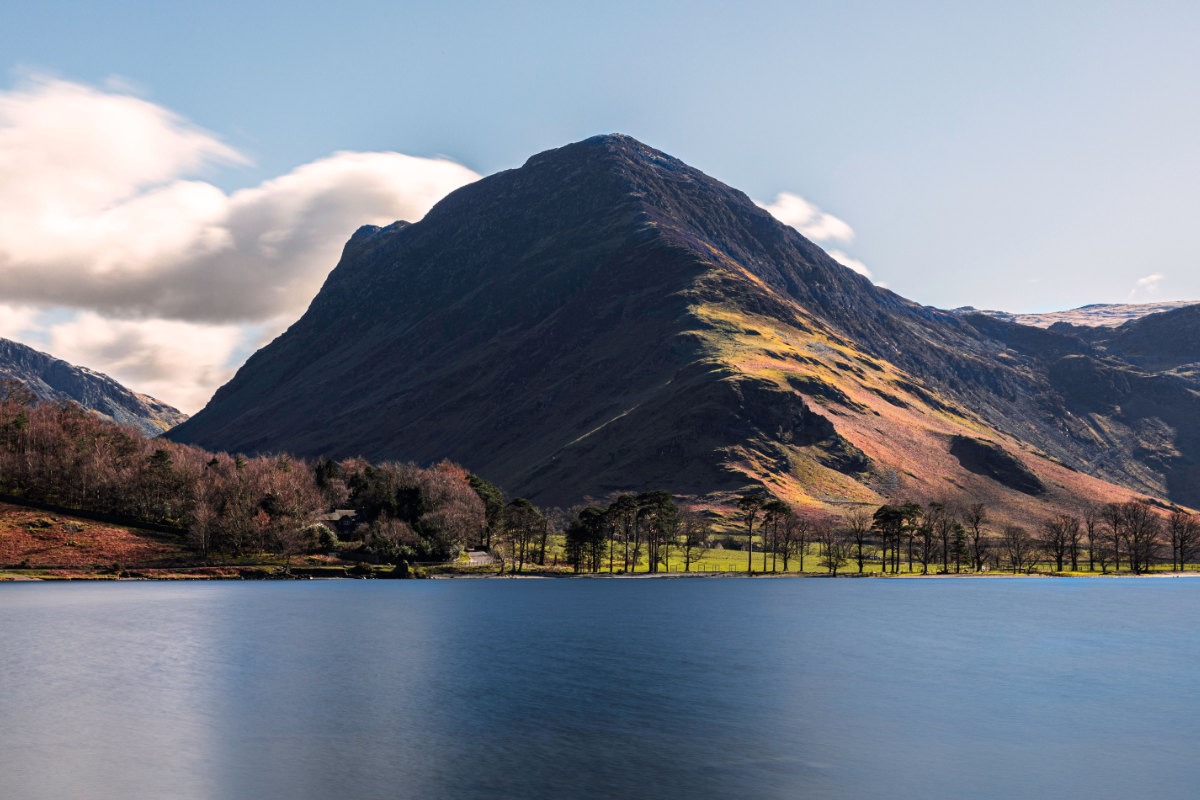
Unlike many Lake District walks that involve steep climbs to exposed summits, the Buttermere circular route follows the shoreline for much of its distance, allowing walkers to enjoy outstanding mountain scenery without tackling a demanding fell walk.
The route passes through woodland, alongside streams and across open countryside, with beautiful views appearing around almost every corner.
One of the highlights is the view towards Fleetwith Pike at the head of the lake, where the steep mountain slopes rise dramatically above the surrounding valley.
The walk also passes Sourmilk Gill, an impressive waterfall cascading down the hillside, and includes a short tunnel cut through the rock beside the lake.
Starting from Buttermere village, this circular walk is approximately 4.5 miles long and generally takes between two and three hours, depending on walking pace and the number of stops.
With relatively little climbing, excellent scenery and several interesting features along the way, the Buttermere circular walk is an ideal introduction to the beauty of the western Lake District.
Buttermere Circular Walk at a Glance
- Location: Buttermere, north-western Lake District, Cumbria
- Starting point: Buttermere village
- Distance: Approximately 4.5 miles (7.2 km)
- Walking time: Allow 2–3 hours, including breaks
- Difficulty: Easy to moderate
- Route type: Circular
- Terrain: Lakeside footpaths, woodland tracks, rocky sections, grassy paths and a short stretch of road
- Main highlights: Buttermere Lake, Sourmilk Gill, Burtness Wood, Gatesgarth, Fleetwith Pike, Haystacks and the lakeside tunnel
- Suitable footwear: Walking boots or supportive walking shoes with reliable grip
- OS Explorer map: OL4 – The English Lakes, North Western Area
Although the walk involves relatively little elevation gain, it includes uneven ground, a short rocky step and sections that may become muddy or slippery after rainfall.
The route is suitable for many reasonably fit walkers, but it is not completely level or obstacle-free.
Starting the Walk in Buttermere Village
The Buttermere circular walk begins in the small village of Buttermere, situated between Buttermere Lake and neighbouring Crummock Water.
Despite its relatively remote location, Buttermere is one of the most popular destinations in the western Lake District.
The village has a traditional Lakeland character, with stone buildings, attractive countryside and several places to enjoy refreshments before or after a walk.
From the village, follow the established footpath towards the lake, passing through the surrounding fields and countryside.
For this guide, we follow the lake anticlockwise, beginning along the western shoreline before returning along the eastern side.
This direction provides beautiful views towards Fleetwith Pike and Haystacks during the outward section, with the lakeside tunnel appearing later in the walk.
As you approach the shoreline, the landscape opens to reveal one of the most impressive mountain settings in the Lake District.
Buttermere lies within a steep-sided valley, with high fells rising on both sides of the water.
The contrast between the peaceful lake and the surrounding mountains makes an immediate impression.
Before continuing, take a moment to appreciate the view along the lake towards Fleetwith Pike.
On a clear day, the mountain dominates the far end of the valley, creating a particularly dramatic backdrop.
Walking Towards Sourmilk Gill
From the village end of the lake, the path continues towards Sourmilk Gill, one of Buttermere’s best-known waterfalls.
The waterfall descends from the high ground around Bleaberry Tarn, tumbling down the steep hillside towards the valley below.
After periods of heavy rainfall, Sourmilk Gill can be particularly impressive, with white water cascading over the rocks.
Its name reflects the appearance of the water as it rushes down the mountainside, creating a pale, foaming stream.
The surrounding woodland and rocky slopes provide an attractive setting for photographs.
There are viewpoints from the established paths near the lower waterfall, allowing walkers to appreciate the scenery without climbing towards the higher cascades.
Although a separate path leads steeply uphill beside Sourmilk Gill towards Bleaberry Tarn, this is not part of the Buttermere circular route.
That ascent is considerably more demanding and involves steep, potentially slippery stone paths.
For the lakeside circuit, remain on the established route towards Burtness Wood.
The waterfall is particularly attractive during spring and autumn, when rainfall often increases the volume of water flowing down the hillside.
Following the Path Through Burtness Wood
After passing the lower slopes near Sourmilk Gill, the route continues into Burtness Wood.
This attractive woodland occupies part of the western shoreline of Buttermere, beneath the steep slopes of the High Stile range.
The trees provide shelter from the wind and create a peaceful atmosphere, particularly during quieter periods of the year.
The path follows the contours of the hillside, occasionally rising above the shoreline before descending again.
Although much of the walking is straightforward, there are some uneven sections with exposed stones and tree roots.
After rainfall, the ground can become muddy and slippery.
As you walk through the woodland, look out for openings between the trees that reveal views across the lake.
The surrounding mountains appear particularly impressive from this side of Buttermere.
Across the water, the steep slopes of Fleetwith Pike and the surrounding fells dominate the landscape.
The changing perspective creates plenty of opportunities for photography.
During spring, the woodland becomes increasingly colourful as new leaves appear, while autumn brings attractive shades of yellow, orange and brown.
This section is particularly enjoyable because it combines the sheltered atmosphere of the woodland with occasional dramatic views across the lake.
Enjoying Views of Fleetwith Pike and Haystacks
As the route continues towards the southern end of Buttermere, the surrounding mountain scenery becomes increasingly impressive.
Fleetwith Pike rises steeply above the head of the valley, creating one of the most recognisable views in the Lake District.
The mountain’s dramatic slopes provide a striking contrast with the calm waters below.
Nearby Haystacks is another famous Lake District fell, closely associated with the celebrated walking writer Alfred Wainwright.
Wainwright described Haystacks as his favourite fell, and his ashes were scattered beside Innominate Tarn, a small mountain tarn near its summit.
Although Haystacks is a popular walking destination, climbing it involves a considerably more demanding route than the Buttermere lakeside circuit.
For walkers who prefer lower-level routes, the shoreline provides an excellent opportunity to appreciate these mountains without tackling their summits.
The views are particularly attractive during clear weather, when the rocky slopes and surrounding ridges are reflected in the water.
However, the scenery can be equally dramatic when cloud moves across the higher fells.
Buttermere is a wonderful place to experience the scale and beauty of the Lake District mountains from the valley floor.
Walking Towards Gatesgarth Farm
The western shoreline path eventually approaches the southern end of Buttermere, where the valley opens towards Gatesgarth.
This is one of the most scenic sections of the circular route.
The surrounding fields and mountain slopes create a traditional Lakeland landscape, while streams descend from the surrounding fells towards the lake.
Continue following the established path towards Peggie’s Bridge, which crosses the watercourse near the head of Buttermere.
The bridge provides an attractive viewpoint towards the surrounding mountains and the southern end of the lake.
From here, the route continues towards Gatesgarth Farm.
Gatesgarth is a familiar starting point for several more demanding Lake District walks, including routes towards Haystacks and Fleetwith Pike.
For the Buttermere circular walk, however, there is no need to climb into the surrounding mountains.
Instead, continue towards the road and prepare to follow the short roadside section connecting the two sides of the lake.
The Short Road Section at Gatesgarth
One of the few sections of the Buttermere circular walk away from the lakeside involves following the road near Gatesgarth.
Although the distance is relatively short, walkers should remain alert for passing vehicles.
The road is narrow in places and may become busy during weekends and holiday periods.
Take particular care when walking with children or dogs.
Follow the road towards the eastern shoreline until you reach the signed path leading back towards Buttermere village.
This section provides another opportunity to appreciate the dramatic mountain scenery at the head of the valley.
Fleetwith Pike rises steeply above the road, while the surrounding countryside reflects the traditional farming character of the western Lake District.
Once you reach the lakeside path, leave the road and continue along the eastern shore.
Returning Along the Eastern Shore of Buttermere
The return section follows the eastern shoreline of Buttermere, offering a different perspective across the lake.
From this side, the steep slopes of High Crag, High Stile and Red Pike dominate the view.
The path passes through a mixture of woodland and more open countryside, with occasional rocky sections close to the water.
Although the route remains relatively low, the terrain is not completely flat.
Some sections involve stepping over rocks, negotiating tree roots or walking along narrow paths.
Take particular care after rainfall, when stones and exposed roots may become slippery.
As you continue around the lake, the views towards Buttermere village gradually change.
The surrounding fells create an impressive backdrop, while the lake reflects the changing light and weather conditions.
On calm days, the reflections can be particularly beautiful.
The eastern shoreline is also a good place to appreciate the contrast between the rugged mountains and the peaceful water below.
Walking Through the Buttermere Lakeside Tunnel
One of the most unusual features of the Buttermere circular walk is the short tunnel cut through the rock along the eastern shoreline.
The tunnel was created to allow the lakeside path to continue around a rocky outcrop without requiring walkers to climb over the hillside.
Today, it provides an interesting and memorable feature of the route.
The tunnel is relatively short, but the interior can be dark, damp and uneven.
Water may collect on the ground, particularly after rainfall.
A small torch or the torch function on a mobile phone can be useful when passing through.
Walk carefully and allow your eyes time to adjust to the reduced light.
The tunnel is generally straightforward for walkers comfortable with enclosed spaces, but some visitors may prefer to take extra care.
Children should be supervised, and walkers should avoid rushing through the darker sections.
Once outside, the route continues along the shoreline towards Buttermere village.
The tunnel adds an unexpected element of interest to an already attractive lakeside walk.
The Famous Buttermere Lone Tree
Buttermere is particularly well known among landscape photographers for its beautiful mountain reflections and distinctive trees growing close to the shoreline.
The famous Buttermere lone tree is one of the area’s most recognisable photographic subjects.
Standing near the water, it creates an attractive foreground against the surrounding mountains.
The tree is particularly striking during calm conditions, when reflections appear across the lake.
Early morning is often an excellent time for photography, especially when the water is still and the surrounding mountains catch the first light.
However, Buttermere is attractive throughout the day, and changing weather can produce dramatic skies and unusual lighting conditions.
When photographing the shoreline, remain on established paths where possible and avoid damaging vegetation or disturbing wildlife.
The landscape is part of a protected national park, and responsible behaviour helps preserve its beauty for future visitors.
Returning to Buttermere Village
The final section of the circular route follows the lakeside paths and surrounding countryside back towards Buttermere village.
As the village approaches, the landscape becomes more open, with traditional stone buildings and fields appearing beyond the shoreline.
The path gradually leaves the immediate lakeside and returns through the surrounding farmland.
Continue following the signed route towards the village.
Some sections may become muddy following rainfall, particularly where paths cross grassy fields.
Once back in Buttermere, walkers can enjoy refreshments or spend some additional time exploring the surrounding countryside.
The village provides a convenient place to relax after completing the circuit.
Although the walk is approximately 4.5 miles long, the scenery is so rewarding that many visitors choose to spend considerably longer enjoying the route.
Allowing time for photographs, refreshments and breaks makes the experience even more enjoyable.
Why Is Buttermere One of the Lake District’s Most Beautiful Lakes?
Buttermere is widely regarded as one of the most picturesque lakes in the Lake District.
Its appeal comes from the combination of relatively peaceful water, dramatic mountain scenery and a traditional rural landscape.
Unlike Windermere, which is surrounded by several larger settlements and busy visitor attractions, Buttermere has retained a more secluded atmosphere.
The lake lies within a steep-sided glacial valley, with mountains rising sharply from the surrounding countryside.
This creates a natural amphitheatre of high fells, particularly around the southern end of the lake.
Fleetwith Pike, Haystacks, High Crag and High Stile provide a dramatic backdrop, while the woodland and fields around the shoreline soften the landscape.
The lake is also relatively compact, making it possible to experience a wide variety of scenery during a single circular walk.
For photographers, walkers and visitors who appreciate natural landscapes, Buttermere offers some of the finest scenery in the national park.
What Walking Boots Are Best for the Buttermere Circular Walk?
Although the Buttermere circular walk is generally less demanding than the surrounding mountain routes, suitable footwear is still important.
The path includes a mixture of gravel tracks, woodland paths, grassy sections and uneven rocky ground.
Some areas can become muddy after rainfall, while the rocky sections may be slippery.
For most walkers, lightweight walking boots are an excellent choice.
Waterproof boots are particularly useful during autumn, winter and spring, when wet ground is more common.
During dry summer conditions, supportive walking shoes with reliable grip may also be suitable.
However, ordinary trainers with smooth soles are less appropriate when the paths are wet or muddy.
The short rocky step along the route also makes reliable traction important.
Walkers should choose footwear that provides comfort, stability and sufficient grip for uneven surfaces.
If you’re planning to explore more Lake District walking routes, a good pair of walking boots can be a worthwhile investment.
Our guide to Choosing the Right Walking Boots explains the main features to consider when selecting footwear.
You can also read Walking Boots vs Walking Shoes to understand the advantages of each option for different walking conditions.
When Is the Best Time to Walk Around Buttermere?
The Buttermere circular walk can be enjoyed throughout the year, although the scenery and walking conditions change considerably between seasons.
Spring
Spring is a beautiful time to visit Buttermere.
Fresh greenery appears across the surrounding woodland and fields, while the waterfalls and streams may be flowing strongly following winter rainfall.
The countryside gradually becomes more colourful as the season progresses.
However, some paths can remain muddy, particularly after prolonged wet weather.
Waterproof walking boots are recommended.
Spring is also an important time for nesting birds and other wildlife, so follow any temporary access notices and keep dogs under close control.
Summer
Summer brings longer daylight hours and generally more opportunities for comfortable walking conditions.
The lake is particularly attractive during fine weather, with clear views towards the surrounding mountains.
However, Buttermere can become busy during weekends, bank holidays and school holidays.
Car parks may fill early, so arriving in the morning is advisable.
Even during summer, carry a waterproof jacket because weather conditions can change quickly in the Lake District.
Autumn
Autumn is one of the most attractive seasons for walking around Buttermere.
The woodland changes colour, creating beautiful contrasts with the surrounding mountains and lake.
Early morning mist and changing light can make the scenery particularly atmospheric.
However, fallen leaves and wet stones can become slippery.
Take extra care on rocky sections and around the lakeside tunnel.
Winter
Winter can bring spectacular mountain scenery, particularly when the surrounding fells are covered in snow.
The lake and surrounding countryside may be much quieter than during the summer months.
However, shorter daylight hours, ice and wet ground can make the route considerably more challenging.
The roads leading into Buttermere may also be affected by winter weather.
Check forecasts and road conditions before travelling, and avoid the walk if ice, flooding or other hazards make the route unsafe.
Is the Buttermere Circular Walk Suitable for Beginners?
The Buttermere circular walk is an excellent introduction to Lake District walking for many reasonably fit beginners.
At approximately 4.5 miles, the distance is manageable for a half-day outing, and the route involves relatively little climbing compared with the surrounding mountain walks.
The scenery is impressive throughout, providing plenty of opportunities to stop and enjoy the views.
However, beginners should remember that the route is not completely flat or obstacle-free.
There are uneven rocky sections, a short rock step, woodland paths and areas that may become muddy.
The short road section near Gatesgarth also requires care.
Walkers should wear suitable footwear and allow sufficient time to complete the route comfortably.
Carrying a map and checking the weather forecast are sensible precautions, even on relatively straightforward walks.
Is Buttermere Suitable for Families with Children?
Buttermere is a popular destination for families, and the circular walk can be rewarding for children who are comfortable walking several miles.
The combination of woodland, waterfalls, bridges, mountain scenery and the lakeside tunnel provides plenty of interest along the way.
However, the full circuit is not suitable for every family.
Younger children may find the distance tiring, while the rocky sections and short scramble require care.
The road section near Gatesgarth is another consideration.
Families should allow additional time for breaks and keep children under close supervision near the water.
The full circular route is not suitable for pushchairs or wheelchairs.
For visitors who prefer a shorter or more accessible walk, the Lake District National Park Authority provides information about alternative lakeshore routes.
These allow visitors to enjoy some of Buttermere’s scenery without completing the full circuit.
Can You Walk Around Buttermere Without Climbing?
Yes. One of the main attractions of the Buttermere circular walk is that it allows visitors to experience dramatic mountain scenery without climbing the surrounding fells.
The route follows relatively low-level paths around the lake, with only modest changes in elevation.
However, this does not mean the entire walk is completely level.
There are uneven sections, rocky steps and occasional short climbs.
Walkers looking for a completely flat, step-free route should investigate the shorter accessible lakeshore options rather than attempting the full circuit.
For most reasonably fit walkers, the circular route offers an excellent balance between manageable walking and outstanding scenery.
Walking Safely Around Buttermere
Although Buttermere is a relatively accessible lakeside walk, preparation is still important.
The Lake District is a mountain environment, and weather conditions can change quickly.
Before setting out, check the forecast and make sure everyone in your group is comfortable with the planned distance.
It’s advisable to carry:
- Comfortable walking boots or shoes with reliable grip
- A waterproof jacket
- Warm layers appropriate to the season
- Drinking water and snacks
- A map and compass or reliable navigation equipment
- A fully charged mobile phone
- A small first-aid kit
- A torch or head torch, particularly during shorter daylight hours
Take care on rocky sections, especially after rainfall.
The lakeside tunnel can be dark and wet, so walk carefully.
Remain alert during the short road section near Gatesgarth.
Keep dogs under close control around livestock and wildlife.
Avoid approaching the lake’s edge where the ground is slippery or unstable.
Buttermere can be extremely cold, even during warmer months, and entering the water carries risks.
Remember that mobile phone reception may be unreliable in parts of the valley.
For further advice about walking safely in the region, read our Mountain Safety in the Lake District guide.
Getting to Buttermere
Buttermere is situated in the north-western Lake District, between Crummock Water and the high mountain passes leading towards Borrowdale and Keswick.
Its relatively remote location is part of its appeal, although travelling there requires some planning.
By Car
Buttermere can be reached by road from Keswick, Cockermouth and the surrounding Lake District valleys.
The B5289 provides access through Borrowdale and Honister Pass, while alternative approaches include the roads through Lorton and Newlands Pass.
Some of these roads are narrow, steep and winding.
Drivers should take particular care in poor weather and during busy holiday periods.
Parking is available in and around Buttermere village, including National Trust and Lake District National Park Authority car parks.
Spaces can fill quickly during weekends and school holidays.
Parking charges and payment arrangements may vary, so check current information before travelling.
By Public Transport
Seasonal bus services connect Buttermere with Keswick and other nearby destinations.
The Honister Rambler services 77 and 77A operate around the surrounding valleys during the main visitor season.
These services provide an alternative to driving and can be particularly useful when parking is limited.
However, timetables and operating periods vary throughout the year.
Check current bus information before travelling, especially outside the summer season.
Facilities
Buttermere village has public toilets, cafés, pubs and places to obtain refreshments.
Facilities are more limited along the circular route itself.
Carry sufficient drinking water and snacks rather than relying on refreshments being available throughout the walk.
Where to Eat After Walking Around Buttermere
After completing the circular walk, Buttermere village is an excellent place to enjoy refreshments.
The village has traditional pubs and cafés serving food and drinks, making it a convenient place to relax after several hours of walking.
Popular establishments include the Bridge Hotel and Buttermere Court Hotel, formerly known as the Fish Inn.
The village is also known for its farmhouse refreshments and locally produced ice cream.
Opening times and menus may vary, particularly outside the main visitor season.
For visitors travelling onwards towards Keswick, there are plenty of additional dining options.
Take a look at our guide to Where to Eat in Keswick: Three Restaurants Recommended by a Local Walker for some personal recommendations.
Other Lake District Walks Worth Exploring
If you’ve enjoyed the Buttermere circular walk, there are plenty of other rewarding routes to discover throughout the Lake District.
Catbells Walking Guide
Explore one of the northern Lake District’s most popular fell walks, with beautiful views across Derwentwater and the surrounding mountains.
Walla Crag to Ashness Bridge Walking Guide
Discover a scenic circular route from Great Wood, taking in Walla Crag and the famous Ashness Bridge.
Rydal Water and Rydal Cave Walking Guide
Enjoy a shorter circular walk near Grasmere, combining peaceful woodland, beautiful lakeside scenery and a fascinating historic quarry.
Easedale Tarn Walking Guide
Follow an attractive route from Grasmere towards Sourmilk Gill and the beautiful mountain setting of Easedale Tarn.
Troutbeck Valley Walking Guide
Explore traditional Lakeland countryside near Windermere, featuring historic Townend farmhouse and attractive views towards the surrounding fells.
Best Walks Around Keswick
Find inspiration for more walking adventures around Derwentwater and the northern Lake District.
These guides provide opportunities to experience different parts of the national park, from peaceful lakeside paths to more challenging mountain landscapes.
Is the Buttermere Circular Walk Worth Doing?
The Buttermere circular walk is undoubtedly one of the most rewarding low-level walks in the Lake District.
It combines some of the region’s finest mountain scenery with peaceful woodland, attractive waterfalls, traditional countryside and beautiful lakeside views.
The route offers a wonderful opportunity to experience the dramatic landscape of the western Lake District without climbing one of the surrounding summits.
Fleetwith Pike and Haystacks provide an impressive backdrop, while the woodland paths, streams and lakeside tunnel add variety to the walking experience.
At approximately 4.5 miles, the route is manageable for many walkers and makes an excellent half-day outing.
Whether you’re visiting during the fresh greenery of spring, the longer days of summer or the colourful landscapes of autumn, Buttermere is a wonderful place to experience the natural beauty of the Lake District.
For walkers looking for an enjoyable circular route with outstanding scenery, Buttermere deserves a place on any Lake District walking itinerary.
Route references: For information about walking around Buttermere and exploring the surrounding valley, visit the National Trust:
For information about the Buttermere lakeshore paths and accessible walking alternatives, visit the Lake District National Park Authority:
https://lakedistrict.gov.uk/route/buttermere-lakeshore/
Walking routes, access arrangements and ground conditions can change. Always check current information, weather forecasts and an appropriate route map before setting out.